Is Your Website Accessible Enough in 2026? What UK Businesses Need to Know
Why web accessibility is crucial for UK businesses in 2026.
Is Your Website Accessible Enough in 2026? What UK Businesses Need to Know
Nearly half of UK websites need accessibility improvements right now.
That’s not opinion: it’s data from research across 1,200+ UK sites in early 2026.
If your site hasn’t been built with accessibility in mind, you’re likely in that half. And the legal landscape just shifted.
The Law Changed While You Weren’t Looking
The Equality Act 2010 always covered websites. Most businesses just ignored it.
That’s changing fast.
The EU Website Accessibility Directive established WCAG 2.2 Level AA as the baseline. The European Accessibility Act took effect in June 2025. UK businesses: especially those in regulated sectors: are now expected to follow these standards.
This isn’t coming. It’s here.
The shift is from “nice to have” to legally required. Building websites properly means building them accessibly from day one.

Who This Actually Affects
You might think this is just for massive corporations. It’s not.
Sectors facing mandatory requirements include:
- Online shops and e-commerce platforms
- Banking and financial services
- Transport and travel booking sites
- Accommodation booking platforms
- Streaming and digital media services
- Telecommunications providers
Public sector organizations: councils, NHS trusts, government bodies: already face legal requirements. They must meet WCAG standards and publish accessibility statements.
Small business exemptions exist. Relying on them is poor planning. If someone can’t use your site, exemptions won’t help your reputation: or your revenue.
What Accessible Actually Means
Accessibility isn’t about checking boxes. It’s about removing barriers.
A professional web design agency builds these principles into every site from the start:
Alt text for images : Screen readers need descriptions. Decorative images can have empty alt text. Product images, infographics, and informational visuals need proper descriptions.
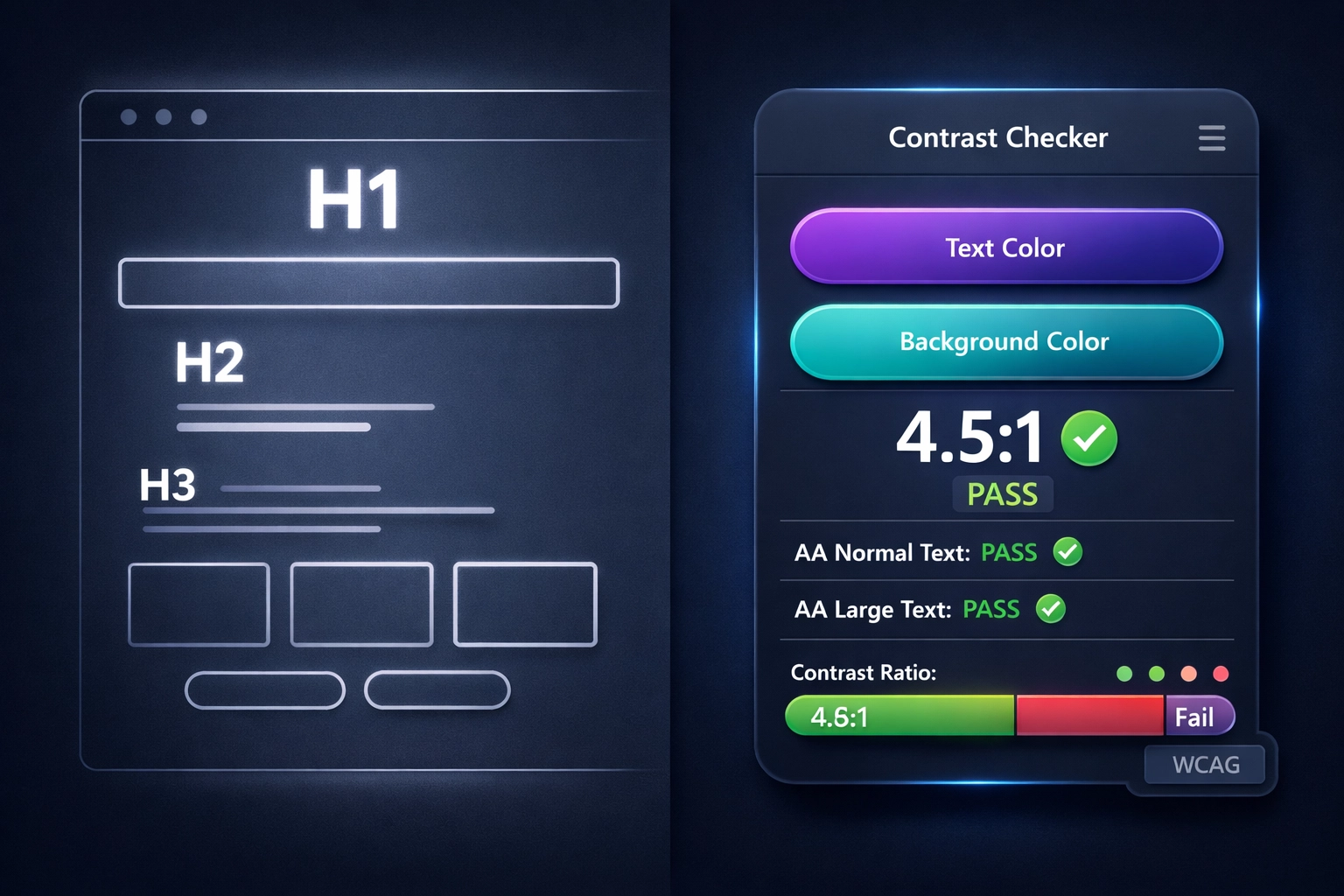
Proper heading structure : H1, H2, H3 tags must follow logical order. No skipping levels. Screen readers navigate by headings.
Color contrast : Minimum 4.5:1 contrast ratio for normal text. Tools exist to check this. Many sites fail spectacularly here.
Resizable text : Users must resize text up to 200% without breaking your layout. Fixed pixel sizes cause problems.
Keyboard navigation : Every function must work without a mouse. Tab through your site. If you can’t access everything, neither can keyboard users.
Video captions and audio transcripts : Not optional. Many users need them: and Google likes them too.
Clear form labels : Every form field needs a visible label. Error messages must be specific and helpful.
Target size : Buttons and links need adequate size. Tiny targets exclude users with motor difficulties.
Accessibility statement : Document what you’ve done, what doesn’t meet standards yet, and how users can contact you about issues.
The Current State of UK Websites
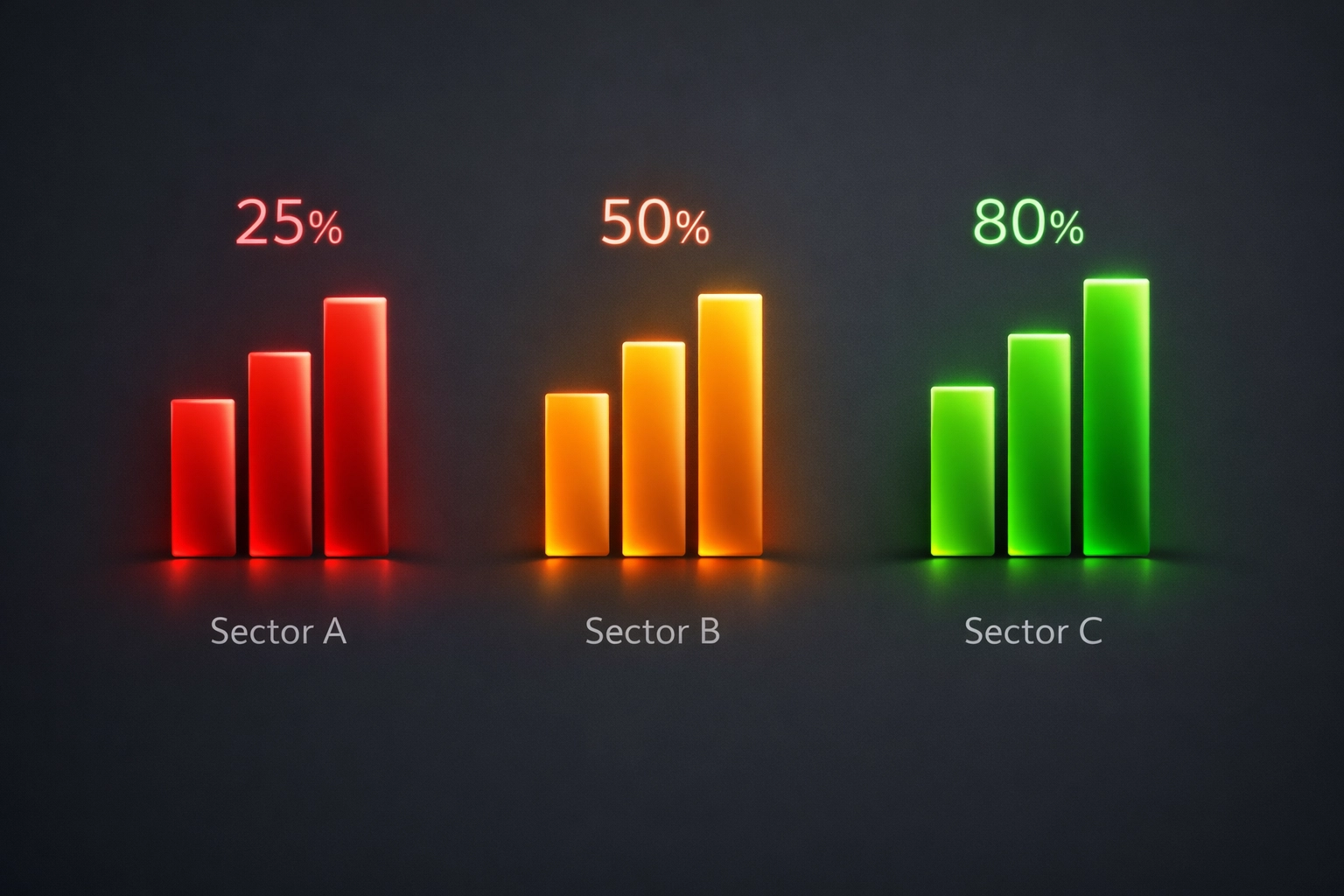
The sector-by-sector breakdown reveals where websites are failing:
Worst performers:
- Travel and tourism: 79% need improvement
- Hospitality: 70% need improvement
- Legal services: 61% need improvement
Best performers:
- Council websites: 8% need improvement
- GP surgeries: 22% need improvement
- Utilities: 26% need improvement
Northern Ireland council websites lead at 100% achieving good scores. Only one UK council: Wyre Forest District: scored poorly.
The pattern is clear. Organizations with legal requirements take accessibility seriously. Those without often don’t.
Until enforcement arrives.
What Happens When You Ignore This
Non-compliance brings real consequences.
The Equality and Human Rights Commission can investigate. Court cases happen. Reputational damage spreads fast.
A single frustrated user can become a social media story. Those stories travel quickly. Fixing accessibility after a PR crisis costs more than building it properly from the start.
But there’s another cost: opportunity cost.
The UK’s disabled population has an estimated spending power of £274 billion. Globally, including friends and family, that figure reaches £1.2 trillion.
An inaccessible website doesn’t just risk legal trouble. It actively turns away customers.
Common Myths That Need Dying
“Accessibility is expensive” : Building it in from the start costs less than retrofitting. A web design agency building sites properly includes accessibility as standard practice.
“No one on my site needs this” : You don’t know that. Many disabilities are invisible. Users won’t announce themselves before leaving your inaccessible site.
“I’ll wait for clearer UK regulations” : The regulations exist. Waiting risks being caught out.
“Accessibility makes sites look bad” : This is backwards. Accessibility principles: clear hierarchy, good contrast, logical structure: improve design for everyone.

What You Should Do Now
Start immediately. Don’t wait for enforcement letters.
Run an accessibility audit : Automated tools catch obvious issues. Manual testing finds the rest. Check color contrast, keyboard navigation, screen reader compatibility.
Fix critical issues first : Images without alt text, poor color contrast, broken keyboard navigation. These are quick wins.
Implement an accessibility interface : Let users adjust text size, colors, and reduce motion according to their needs.
Create an accessibility statement : Document your commitment, which guidelines you follow, known issues, and contact information for accessibility concerns. Make it easy to find.
Work with professionals : A professional web design agency understands these requirements. We build sites properly from the ground up, with accessibility baked into every decision.
The Bigger Picture
Web accessibility isn’t a checkbox exercise. It’s fundamental to professional website design.
Sites built properly serve more users. They rank better in search engines. They face less legal risk. They convert better.
The web was designed to be accessible to everyone. That’s not idealism: it’s practical business sense.
Your competitors are sorting this out. Public sector sites already comply. The travel industry is scrambling to catch up.
Where does your site stand?

Moving Forward
Accessibility requirements will only get stricter. The European Accessibility Act set a precedent. UK enforcement mechanisms will develop.
Getting ahead of this isn’t optional anymore. It’s responsible website ownership.
If you’re building a new site or redesigning an existing one, accessibility needs to be part of the brief. Not an afterthought. Not a phase two consideration.
From the start.
That’s how we approach every project: building sites that work for everyone, meet current standards, and won’t need expensive retrofitting when enforcement catches up.
Need help assessing where your site stands? Get in touch. We can audit what you have and show you what needs attention.
The question isn’t whether to make your site accessible. It’s whether you’ll do it now or after problems arise.