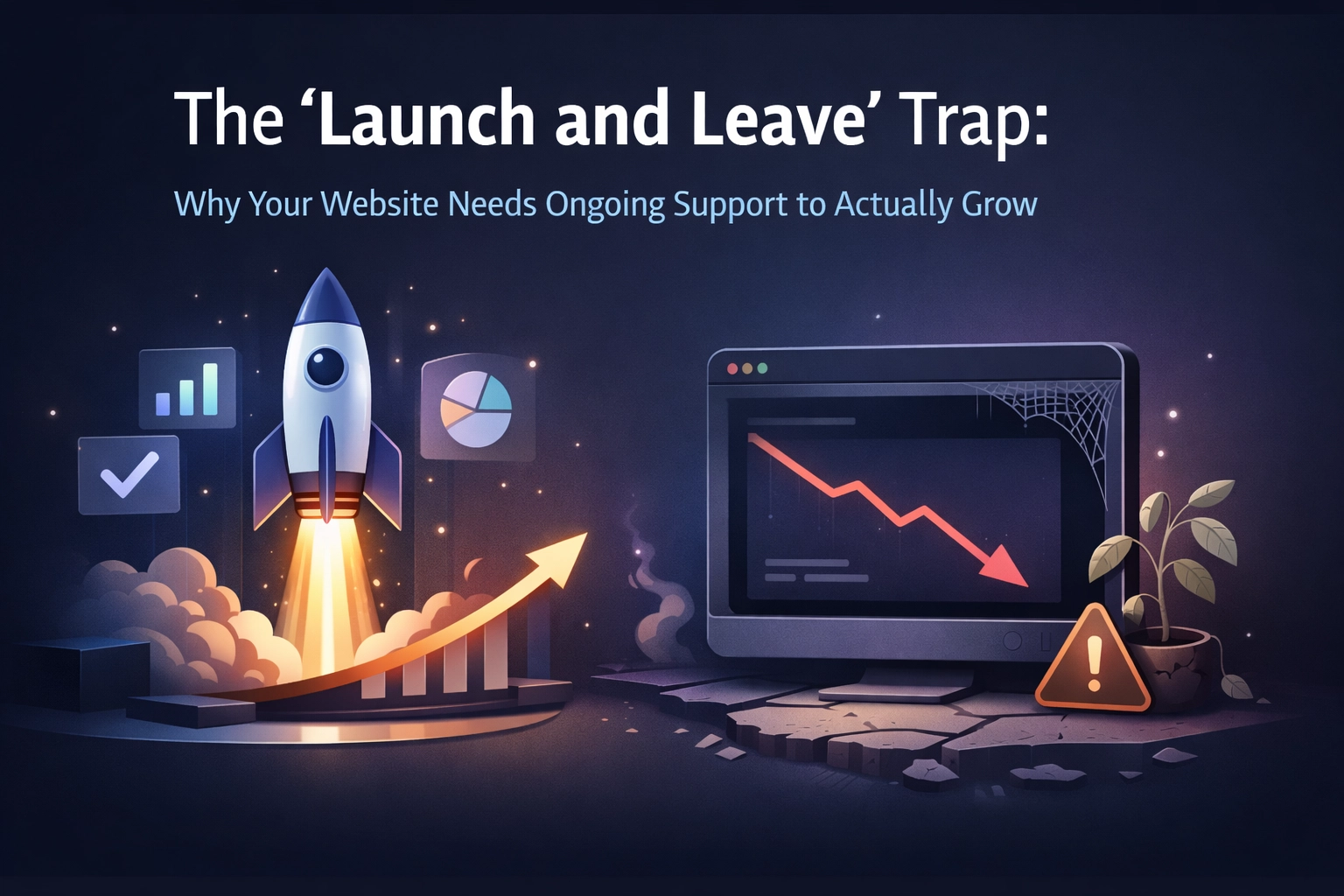
The 'Launch and Leave' Trap: Why Your Website Needs Ongoing Support to Actually Grow
Most businesses treat a website launch as the finish line, but it’s actually the starting point. Discover why the 'launch and leave' approach kills growth and how proactive support keeps your site fast, secure, and profitable.
Your website goes live. You celebrate. The project is finished.
Except it isn’t.
That’s when the real work begins: and it’s the work most businesses skip. They treat their website like a finished product. Launch it, forget it, move on. But a website isn’t a product. It’s a tool. And tools need maintenance.
Without ongoing support, your site becomes less effective every single day. It gets slower. Less secure. Less visible. Less profitable.
This is the launch and leave trap. And it’s costing you more than you think.
Launch Is Just the Starting Point
You wouldn’t buy a car and never service it. You wouldn’t open a shop and never clean it. Your website works the same way.
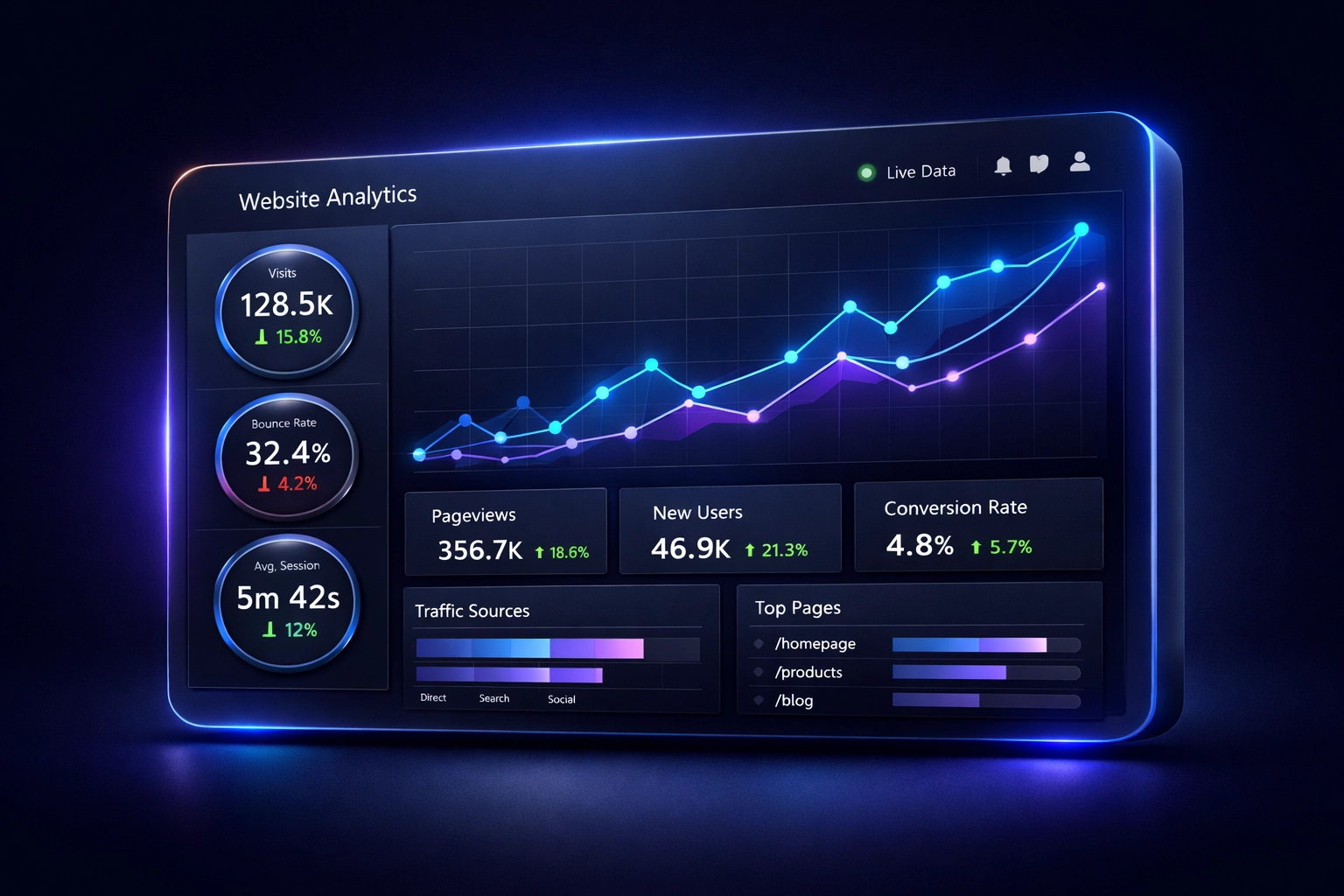
Launch day is when measurement begins. You can finally see how real users interact with your site. Where they click. Where they leave. What converts. What doesn’t.
All that data means nothing if you’re not there to act on it.
Performance optimization happens after launch: not before. You adjust based on actual behavior, not assumptions. You fix bottlenecks you didn’t know existed. You test variations that improve conversion rates.
This isn’t optional extra work. It’s how websites become effective business tools.
What Happens When You Abandon a Website
Websites don’t stay static. They degrade.
Performance slows as third-party scripts accumulate. A tracking pixel here. An analytics tool there. A chat widget. A form integration. Each one adds weight. Each one slows your load time.
Google found that 53% of mobile users abandon sites that take more than three seconds to load. Each additional second costs you 7% in conversions.
Your competitors optimize while you don’t. They climb search rankings. They improve their conversion rates. They take the traffic: and sales: that could have been yours.
Security vulnerabilities appear. Software updates release. Patches become available. If you’re not monitoring and updating, you’re exposed. Not tomorrow. Today.
Your business changes. New services launch. Prices adjust. Offers expire. Team members join or leave. If your website doesn’t reflect these changes, it actively damages your credibility.
The Technical Reality
A properly built site needs ongoing attention across multiple areas.
Performance monitoring catches issues before users notice them. Server response times. Page load speeds. Error rates. These metrics shift over time. You need eyes on them.
Security updates protect your business and your visitors. Vulnerabilities get discovered regularly. Patches get released. Applying them quickly isn’t paranoia: it’s basic hygiene.
Content updates keep your site relevant. Product information. Service descriptions. Team bios. Contact details. Outdated content makes you look abandoned.
Compatibility testing ensures your site works across browsers and devices. New browser versions release constantly. Features break. Layouts shift. You need to catch these problems.
Backup systems prevent catastrophic data loss. Regular backups. Tested restore procedures. These systems need monitoring and maintenance.

The Business Impact
The cost of abandonment shows up in your bottom line.
You lose sales to slow load times. Visitors click away before your content loads. They never see your offer. They never become customers.
You pay more for advertising. Poor landing page performance increases your cost per click. Slow sites get penalized by ad platforms. Your acquisition costs climb.
You accumulate technical debt. Small issues compound. What could have been a quick fix becomes a major project. Eventually, you need a complete rebuild: far more expensive than ongoing maintenance.
Your team loses confidence in the website. Making changes feels impossible. Adding new offerings becomes complicated. The site transforms from an asset into a constraint.
What Ongoing Support Actually Means
Support isn’t about paying someone to be available if something breaks. That’s reactive. Support should be proactive.
Regular performance audits identify optimization opportunities. We measure load times. We analyze user behavior. We spot bottlenecks before they impact revenue.
Scheduled security updates keep your site protected. We monitor for vulnerabilities. We test and apply patches. We maintain security protocols.
Content management support gives you flexibility. You need to update pricing: it happens quickly. You want to add a new service: it gets done properly. Your site moves at the speed of your business.
Technical monitoring catches problems early. Server issues. Broken forms. Failed integrations. We spot and fix them before your customers encounter them.
Strategic improvements drive growth. We don’t just maintain: we enhance. Better conversion paths. Improved user flows. Higher performance scores. Your site gets stronger over time.
How to Think About Website Investment
A website isn’t a one-time purchase. It’s an ongoing investment: like rent, insurance, or employee salaries.
The businesses that succeed online treat their website as a living part of their operation. They budget for maintenance. They plan for improvements. They measure results and optimize continuously.
The ones that struggle see the website as a finished project. They’re surprised when it stops working effectively. They’re frustrated when changes feel impossible. They wonder why their competitors are winning.
The difference isn’t talent or budget. It’s approach.
Your website should work harder for your business every month: not decline. That requires intention. It requires support.
Moving Forward
If you launched your site and walked away, you’re not alone. Most businesses fall into this trap. The question is what you do next.
You can keep treating your website as a static asset and watch its effectiveness slowly erode. Or you can start treating it as what it actually is: a tool that needs ongoing care to deliver results.
We build sites properly from the beginning. But more importantly, we’re there after launch to make sure they keep performing. That’s where the real value comes from.
Your website should be growing your business: not holding it back. If it isn’t, we should talk.