Why Your Business Website Feels Slow (Even When It Loads Fast)
A guide to website design language.
Why Your Business Website Feels Slow (Even When It Loads Fast)
Your website loads in 2.5 seconds.
Google says that’s fine. Your developer says it’s fast. The metrics look good.
But visitors still bounce. They still complain. They still leave before they see your offer.
Here’s the problem: load time and perceived speed are two different things.
The Metrics Lie (Sort Of)
Most businesses measure the wrong thing.
They look at total page load time. The number that appears in speed tests. The metric that shows when every single element finishes loading.
But your visitors don’t wait for that. They judge your site in the first second: sometimes less.
If nothing appears on their screen quickly, they think your site is broken. They don’t care that the full page eventually loads. They’ve already formed an opinion.
This gap between actual speed and perceived speed costs you conversions.
Time to First Byte Ruins First Impressions
Time to First Byte (TTFB) measures how long your server takes to respond.
Before anything displays on screen, the browser waits for the server. If that wait stretches to two seconds, visitors see nothing. Just a blank white screen.
They assume your site is slow: even if everything loads quickly after that initial delay.
Common causes of poor TTFB:
- Cheap shared hosting
- Unoptimized database queries
- No server-level caching
- Bloated backend code
- Geographic distance from server
The server response happens before any loading bar appears. Before any visual feedback. Visitors just stare at emptiness.
That wait feels much longer than it actually is.
Blocking Resources Create Dead Air
Your site might load fast overall. But if JavaScript or CSS blocks the browser from displaying anything, visitors experience dead time.
Total Blocking Time measures how long the browser sits idle: waiting for scripts to execute before it can show content.
Visual page builders make this worse. They add layers of JavaScript that must run before anything renders. The browser has all the content. It just can’t display it yet.

From a visitor’s perspective, your site is frozen.
They don’t know the browser is processing code. They just know they’re looking at a blank screen. And they’re impatient.
Progressive Rendering Matters More Than Total Speed
Two websites both load in 2 seconds.
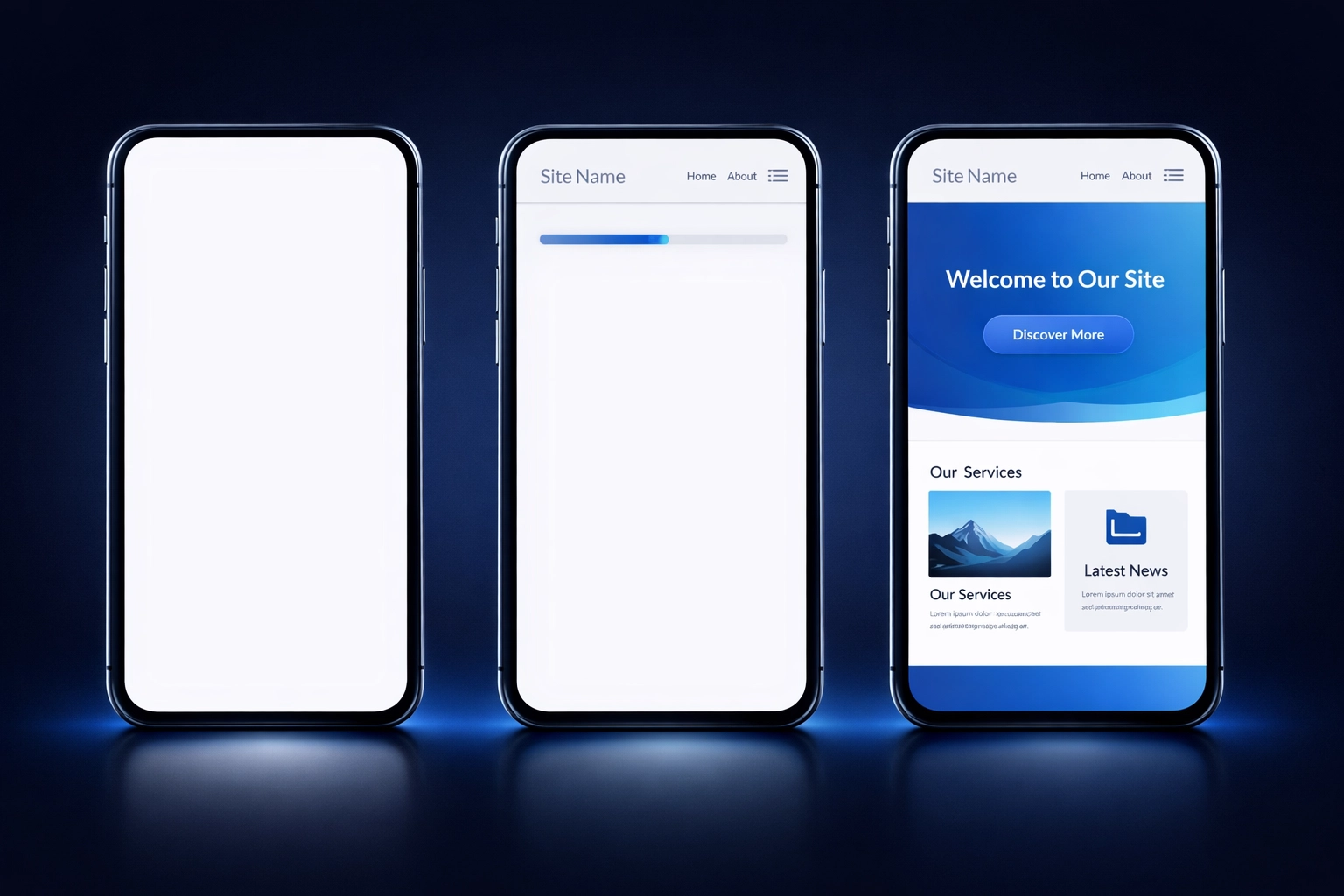
Website A shows the header and main content within 0.5 seconds. Images and extra features load after.
Website B shows nothing for 1.8 seconds, then everything appears at once.
Which one feels faster?
Website A: every time.
Progressive rendering means showing content as it becomes available. Visitors see something immediately. They can start reading. They feel like the site is working.
Website B delivers everything faster overall. But the perceived experience is worse. The wait feels endless.
Most business websites fail at progressive rendering because they:
- Load large hero images before text
- Wait for external scripts to load first
- Require all CSS to download before displaying anything
- Load unnecessary elements above the fold
Your visitors don’t need to see everything at once. They need to see something: anything: quickly.
What Visitors Actually Experience
Forget the metrics for a moment.
Think about what happens when someone clicks your link:
- They see their previous page for a moment
- The URL changes
- The screen goes white
- Nothing happens
- Still nothing
- Finally, something appears
That gap: between the URL changing and content appearing: defines perceived speed.
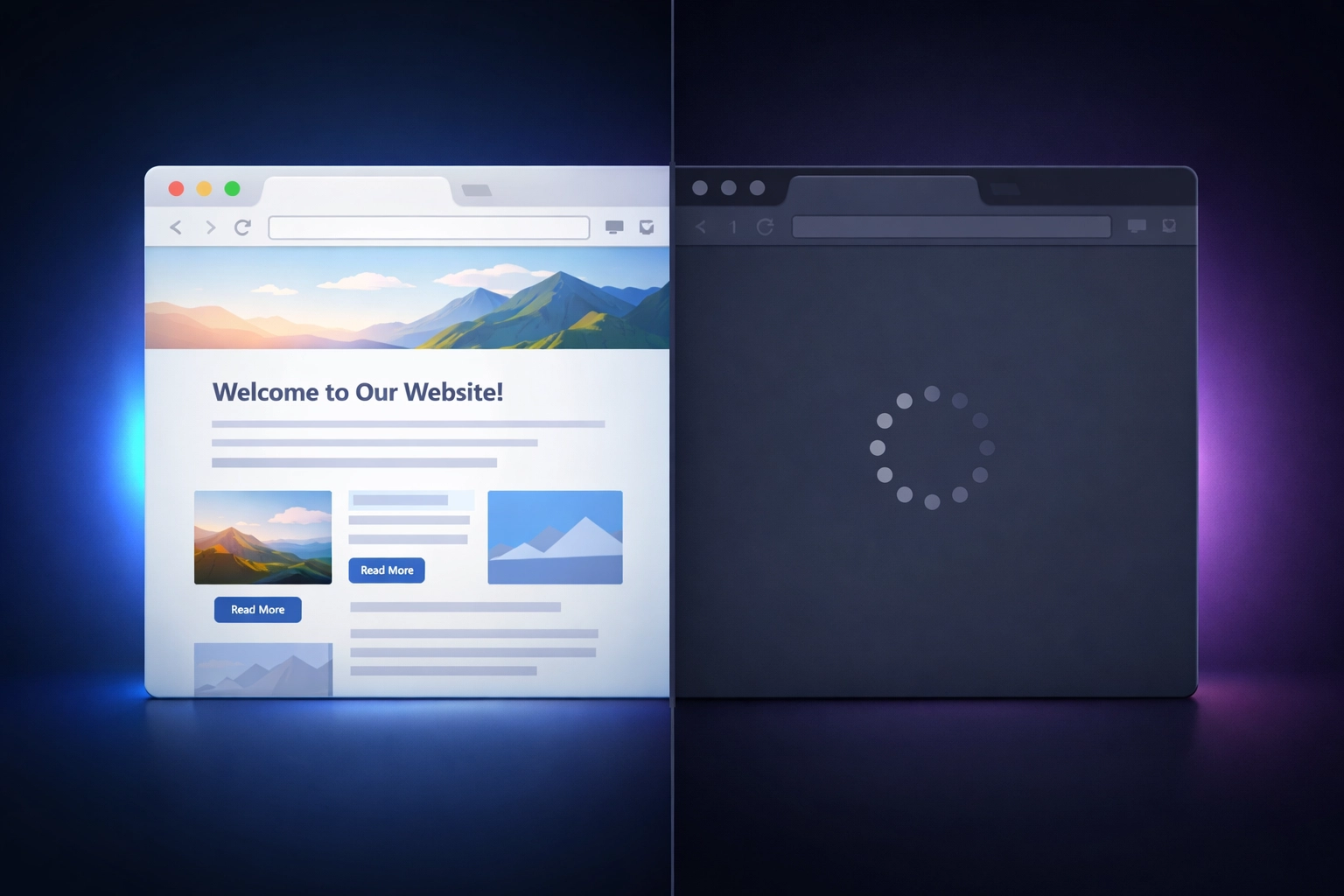
If that gap exceeds one second, your site feels slow. Even if technical metrics say otherwise.
Your visitors judge speed by:
- How quickly they see anything on screen
- How soon they can interact with content
- Whether the site responds to scrolling immediately
- If buttons and links work without delay
They don’t judge by when the footer images finish loading.
The Real Culprits
Most “slow feeling” websites share common issues:
Heavy fonts loading first : Custom fonts block text rendering. Visitors see blank spaces where headlines should be.
Unoptimized images above the fold : Large hero images delay everything else. The browser prioritizes downloading the image over showing text.
Too many external scripts : Each tracking pixel, analytics tool, and social widget adds blocking time. They load before your content does.
Render-blocking CSS : The browser won’t display anything until all CSS downloads. Even CSS for elements below the fold.
No loading states : When nothing appears, visitors assume the site broke. A simple loading indicator changes that perception entirely.
These issues don’t necessarily make your site slow by metrics. They make it feel slow by experience.
How We Build for Perceived Speed
At JBH Media, we optimize for what visitors actually experience: not just what speed tests report.
We prioritize critical content. Text and layout load first. Images and extras load after. Visitors see something immediately.
We use proper font loading strategies. Text appears in system fonts, then swaps to custom fonts. No blank text blocks.

We defer non-critical scripts. Analytics and tracking load after content. Visitors never wait for them.
We implement proper caching at multiple levels. Server caching, browser caching, and CDN distribution. The second visit feels instant.
We test on real connections: not just lab conditions. We simulate 3G mobile networks, not just office Wi-Fi.
The result? Sites that feel fast even when they’re just average by metrics. And sites that feel instant when they’re actually fast.
The Business Impact
Perceived speed directly affects your bottom line.
A site that feels slow: even if it’s technically acceptable: increases bounce rates. Visitors leave before seeing your offer.
Amazon found that every 100ms of delay costs them 1% in sales. That’s not about total page load time. That’s about perceived responsiveness.
Your business might not be Amazon-scale. But the principle applies. When your site feels sluggish, potential customers move on.
They don’t analyze why it feels slow. They don’t check metrics. They just leave.
What You Should Measure Instead
Stop obsessing over total page load time.
Start measuring:
- Largest Contentful Paint (LCP) : When the main content becomes visible
- First Contentful Paint (FCP) : When anything first appears
- Time to Interactive (TTI) : When visitors can actually use the site
- Cumulative Layout Shift (CLS) : Whether elements jump around while loading
These metrics reflect actual user experience. They measure what visitors perceive: not what happens in the background.
If your LCP is under 2.5 seconds and your FCP is under 1 second, your site will feel fast. Even if total load time is longer.
Getting It Right From The Start
Most agencies build sites that pass speed tests. Then wonder why clients report “feeling slow.”
They optimize for metrics, not experience.
We build sites properly: with perceived speed built in from day one. Not patched in later.
That means:
- Proper architecture that prioritizes critical content
- Smart resource loading strategies
- Clean, efficient code without bloat
- Real testing on actual devices and connections
Your website should feel instant the moment someone clicks. Not two seconds later. Not “once everything loads.”
Immediately.
That’s the difference between a site that converts and one that frustrates.
If your current site feels slow: even if the metrics say otherwise: it’s worth rebuilding properly. The technical debt of fixing perceived speed issues on a poorly-built site often exceeds the cost of starting fresh.
We can help with that. Get in touch and we’ll show you the difference between fast metrics and fast experiences.